
For research use only · Not FDA/EMA approved · Not for human consumption
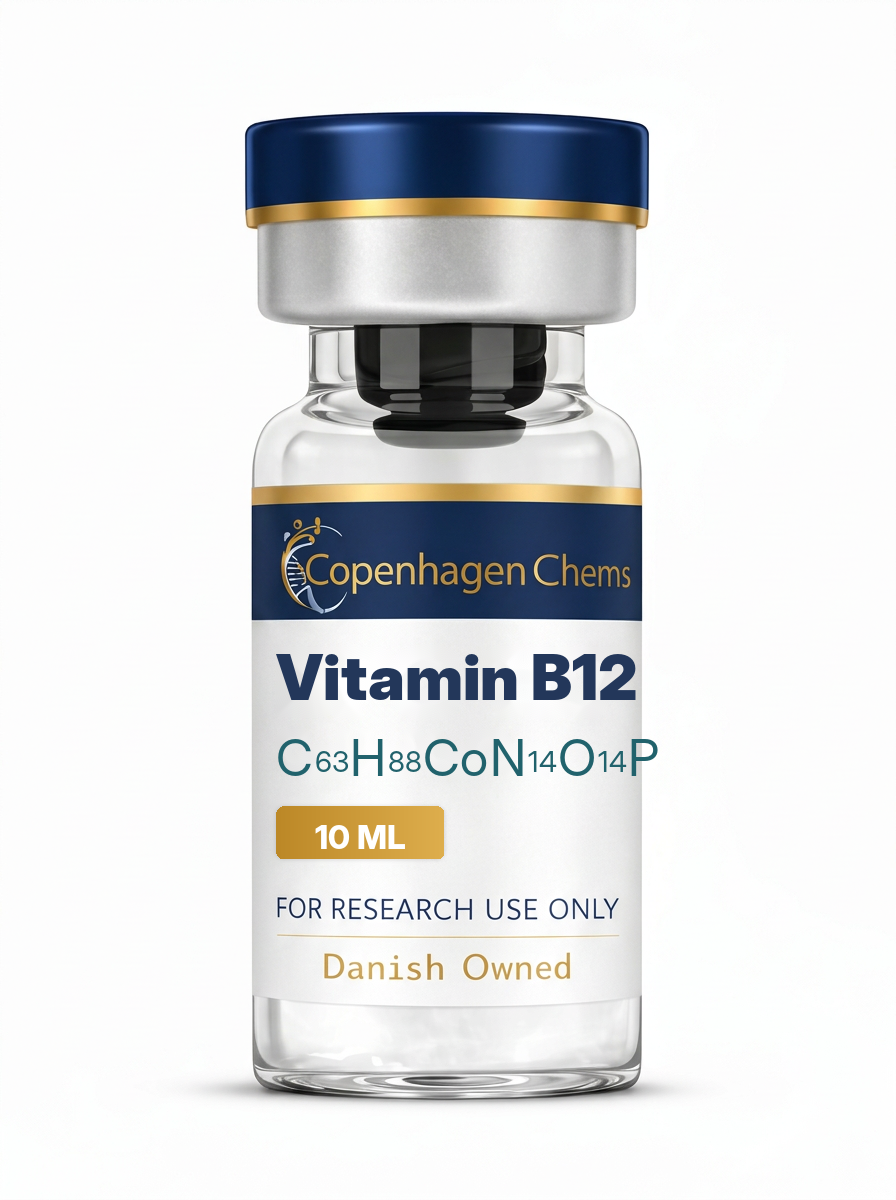
Vitamin B12
Vitamin B12 (Cyanocobalamin)
- CAS Number
- 68-19-9
- Molecular Weight
- 1355.4 g/mol
- Molecular Formula
- C₆₃H₈₈CoN₁₄O₁₄P
Overview
Vitamin B12 is an essential water-soluble vitamin built around a corrin ring coordinating a central cobalt atom — the only known biological molecule to contain cobalt, and the largest and most structurally complex of the vitamins. Cyanocobalamin is the synthetic form most commonly used in supplementation and in the published trial literature; it is converted in the body to the active coenzyme forms methylcobalamin and adenosylcobalamin. Unlike most compounds in this database, the essentiality of B12 is entirely settled science; the published research questions concern optimal dose, route and the populations in which supplementation produces measurable benefit.
For research use only · Not FDA/EMA approved · Not for human consumption
Mechanism of Action
Vitamin B12 functions as a cofactor for two enzymes in human metabolism. Methylcobalamin is required by methionine synthase, which converts homocysteine to methionine, linking B12 status to folate metabolism and to circulating homocysteine concentration. Adenosylcobalamin is required by methylmalonyl-CoA mutase, which converts methylmalonyl-CoA to succinyl-CoA in the catabolism of certain fatty acids and amino acids. Deficiency accordingly raises both homocysteine and methylmalonic acid, and published work uses these metabolites as functional status markers, which is discussed in the literature as more informative than serum B12 concentration alone.
For research use only · Not FDA/EMA approved · Not for human consumption
Key Research Areas
- Oral dose-finding in older adults with deficiency
- Sublingual supplementation in vegans and vegetarians
- Alternative delivery routes including fortified formulations
- Prevention of deficiency in at-risk populations
- B vitamins and homocysteine in stroke prevention research
For research use only · Not FDA/EMA approved · Not for human consumption
Published Studies (4 cited)
| Author | Year | Key Finding | Source |
|---|---|---|---|
| Eussen SJ et al. | 2005 | Dose-finding trial of oral cyanocobalamin supplementation in older people with vitamin B12 deficiency. | View paper ↗ |
| Del Bo' C et al. | 2019 | Randomised controlled trial comparing two sublingual vitamin B12 dosages in vegans and vegetarians with marginal deficiency. | View paper ↗ |
| Mearns GJ et al. | 2014 | Randomised controlled trial comparing an oral vitamin B12 supplement with dietary advice for preventing deficiency in South Asian women of childbearing age. | View paper ↗ |
| Hankey GJ | 2018 | Review of B vitamins, including B12, in stroke prevention and the homocysteine hypothesis. | View paper ↗ |
For research use only · Not FDA/EMA approved · Not for human consumption
Dosage in Published Research
Published trials span a wide dose range depending on route and population. Oral dose-finding work in deficient older adults examined doses well above nutritional requirements, reflecting the low fractional absorption of oral B12 when intrinsic factor-mediated uptake is saturated or impaired. Sublingual trials have compared distinct dosages in marginally deficient vegetarians and vegans. Parenteral protocols follow separate clinical schedules. All figures are reported from published clinical literature for reference purposes only.
⚠️ Disclaimer: All dosage information is derived exclusively from published scientific literature and is presented for informational reference only. This does not constitute dosing guidance for any application.
For research use only · Not FDA/EMA approved · Not for human consumption
Storage & Handling
Store protected from light — cyanocobalamin solutions are photosensitive and degrade on light exposure, which is why amber containers are standard in published protocols. Store the solid at room temperature or refrigerated in a sealed, light-protected container. Solutions should be refrigerated at 2–8°C and protected from light. Handle under laboratory conditions using appropriate PPE.
For research use only · Not FDA/EMA approved · Not for human consumption
Safety Profile (Literature Only)
Vitamin B12 is water-soluble with excess excreted renally, and the published literature describes a wide margin of tolerability; no tolerable upper intake level has been set by the principal nutrition authorities on the basis of the available evidence. Published clinical guidance emphasises one practically important point: supplementation can correct the haematological signs of deficiency while permitting neurological consequences to progress if the deficiency is not properly diagnosed and monitored. This compound is supplied for laboratory research use only.
For research use only · Not FDA/EMA approved · Not for human consumption
Related Compounds
NAD+
An essential coenzyme present in all living cells, investigated for its declining levels with age and role in sirtuin-mediated longevity pathways.
LongevityEpithalon
A synthetic tetrapeptide based on epithalamin, studied for telomerase activation and circadian rhythm modulation in aging research.
Weight LossL-Carnitine
A quaternary ammonium compound required for transport of long-chain fatty acids into mitochondria, studied in exercise recovery and clinical deficiency states.
For research use only · Not FDA/EMA approved · Not for human consumption