
For research use only · Not FDA/EMA approved · Not for human consumption
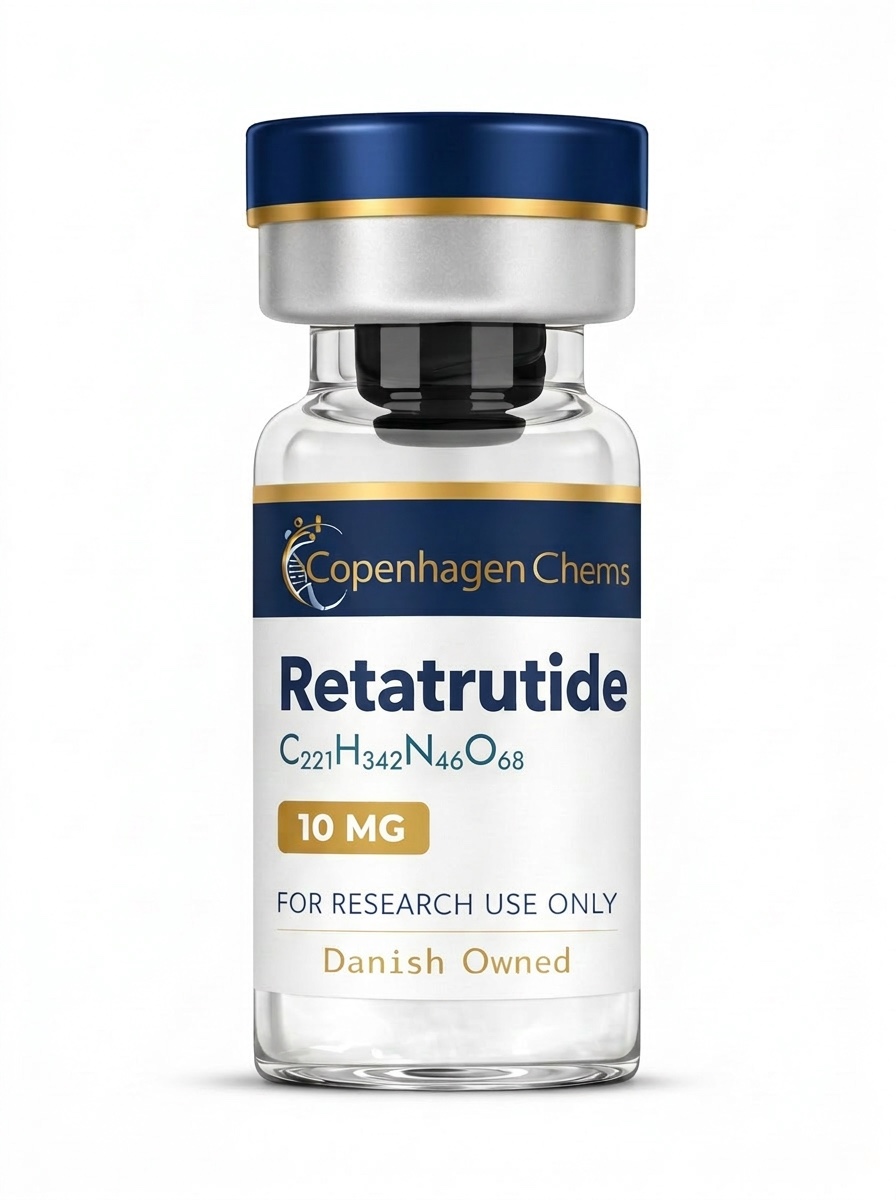
Retatrutide
Retatrutide (LY-3437943)
- CAS Number
- 2381089-83-2
- Molecular Weight
- 4963.52 g/mol
- Molecular Formula
- C₂₂₁H₃₄₂N₄₆O₆₈
Overview
Retatrutide (LY-3437943) is a single-molecule triple agonist targeting glucagon-like peptide-1 (GLP-1), glucose-dependent insulinotropic polypeptide (GIP), and glucagon receptors simultaneously. Developed by Eli Lilly, it represents a novel approach in metabolic research by engaging all three incretin and glucagon pathways. Phase 2 clinical trial data published in the New England Journal of Medicine demonstrated significant effects on body weight and metabolic parameters. The compound's unique triple-agonist mechanism distinguishes it from dual-agonist compounds and has generated considerable interest in the metabolic research community. Retatrutide has been described in published literature as one of the most potent weight-reduction compounds studied in clinical trials to date.
For research use only · Not FDA/EMA approved · Not for human consumption
Mechanism of Action
Retatrutide simultaneously activates three G-protein coupled receptors: GLP-1R, GIPR, and GCGR. Published research describes how GLP-1 receptor activation promotes satiety signaling and insulin secretion, GIP receptor engagement enhances incretin-mediated metabolic effects, and glucagon receptor activation increases energy expenditure through hepatic mechanisms and thermogenesis. The triple-agonist design is hypothesized to produce synergistic metabolic effects exceeding those of single or dual agonists. Clinical trial publications describe effects on gastric emptying, appetite regulation, hepatic lipid metabolism, and glucose homeostasis through these combined receptor interactions.
For research use only · Not FDA/EMA approved · Not for human consumption
Key Research Areas
- Body weight and composition changes in Phase 2 clinical trials
- Triple incretin receptor agonism and metabolic synergy
- Hepatic fat reduction and liver-related metabolic markers
- Glucose homeostasis and insulin sensitivity in clinical settings
- Cardiovascular risk factor modification in metabolic studies
- Comparative efficacy research vs. dual GLP-1/GIP agonists
For research use only · Not FDA/EMA approved · Not for human consumption
Published Studies (6 cited)
| Author | Year | Key Finding | Source |
|---|---|---|---|
| Jastreboff AM et al. | 2023 | Phase 2 trial: retatrutide at highest dose (12mg) demonstrated 24.2% mean body weight reduction at 48 weeks in participants with obesity. | View paper ↗ |
| Rosenstock J et al. | 2023 | Retatrutide showed dose-dependent reductions in HbA1c and body weight in participants with type 2 diabetes in a Phase 2 trial. | View paper ↗ |
| Coskun T et al. | 2022 | Preclinical characterization of LY-3437943 demonstrating triple agonist activity and dose-dependent metabolic effects in animal models. | View paper ↗ |
| Urva S et al. | 2023 | Phase 1 data showing retatrutide's pharmacokinetic profile supported once-weekly dosing with acceptable tolerability. | View paper ↗ |
| Sanyal AJ et al. | 2024 | Retatrutide demonstrated significant reductions in liver fat content in participants with metabolic dysfunction-associated steatotic liver disease. | View paper ↗ |
| Bajaj HS et al. | 2026 | Trial of retatrutide, a GIP, GLP-1 and glucagon receptor agonist, reporting efficacy and safety endpoints. | View paper ↗ |
For research use only · Not FDA/EMA approved · Not for human consumption
Dosage in Published Research
Published Phase 2 clinical trials have investigated retatrutide at doses of 0.5 mg, 1 mg, 2 mg, 4 mg, 8 mg, and 12 mg administered subcutaneously once weekly with dose escalation protocols. These doses are derived exclusively from published clinical trial data (NCT05929066, NCT04881760) and are presented for informational purposes only. No standardized research protocol exists outside of clinical trial settings.
⚠️ Disclaimer: All dosage information is derived exclusively from published scientific literature and is presented for informational reference only. This does not constitute dosing guidance for any application.
For research use only · Not FDA/EMA approved · Not for human consumption
Storage & Handling
Store lyophilized material at -20°C. Reconstituted solutions should be stored at 2–8°C and used within 7 days. Avoid repeated freeze-thaw cycles. Handle in a controlled laboratory environment with appropriate PPE.
For research use only · Not FDA/EMA approved · Not for human consumption
Safety Profile (Literature Only)
Published Phase 2 clinical trial data reported gastrointestinal adverse events (nausea, diarrhea, vomiting, constipation) as the most common side effects, generally mild-to-moderate and dose-dependent. Dose escalation protocols were associated with improved tolerability. No clinical safety data is available outside of controlled trial settings. This compound is for laboratory research use only.
For research use only · Not FDA/EMA approved · Not for human consumption
Related Compounds
NAD+
An essential coenzyme present in all living cells, investigated for its declining levels with age and role in sirtuin-mediated longevity pathways.
LongevityMOTS-c
A mitochondria-derived peptide (MDP) discovered in 2015, investigated for AMPK activation and metabolic regulation in aging research.
For research use only · Not FDA/EMA approved · Not for human consumption