
For research use only · Not FDA/EMA approved · Not for human consumption
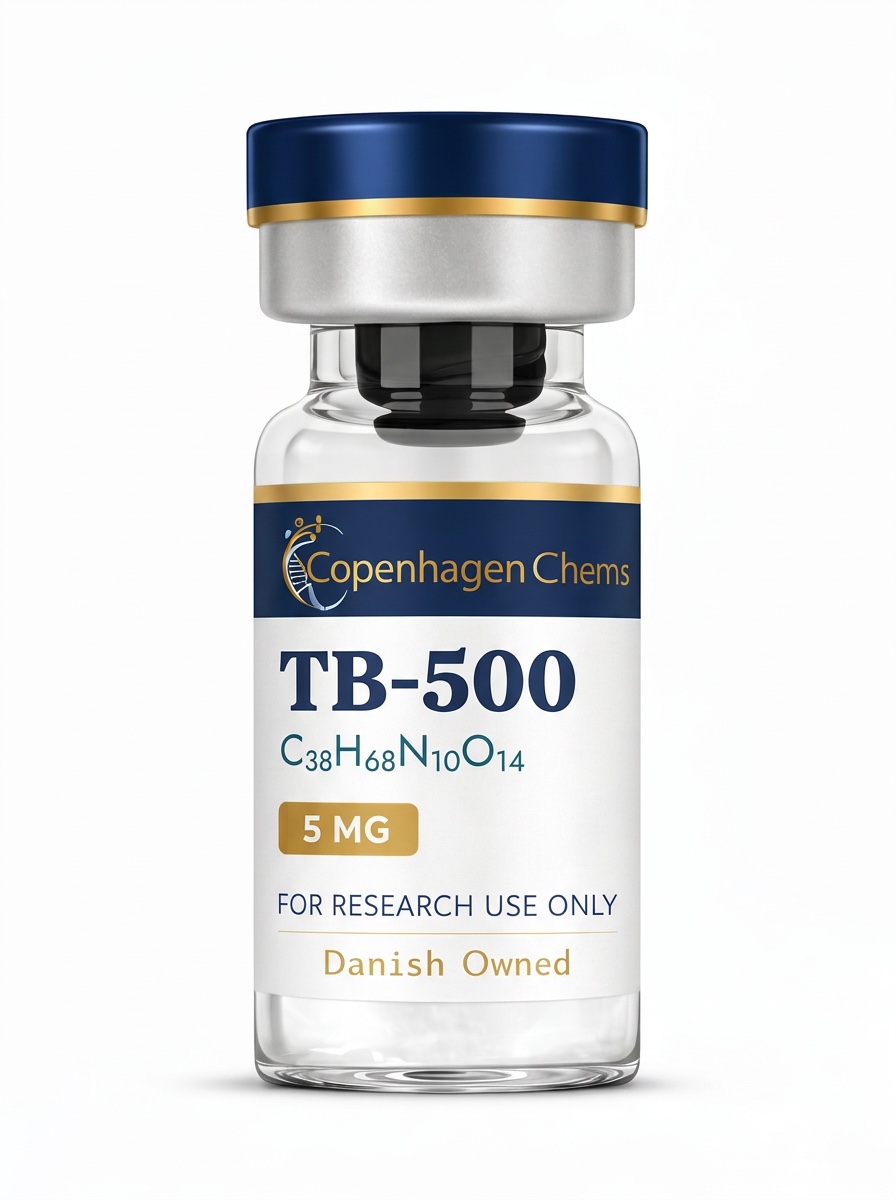
TB-500
Thymosin Beta-4 Fragment (Tβ4)
- CAS Number
- 77591-33-4
- Molecular Weight
- 4963.44 g/mol
- Molecular Formula
- C₂₁₂H₃₅₀N₅₆O₇₈S
Sequence
Ac-SDKP (active fragment)
Available in Shop
Overview
TB-500 is a synthetic version of thymosin beta-4 (Tβ4), a 43-amino acid protein naturally occurring in virtually all human and animal cells. Thymosin beta-4 was originally isolated from the thymus gland and has been identified as the primary intracellular G-actin sequestering peptide. Its role in actin dynamics makes it central to cellular processes including migration, differentiation, and tissue repair. TB-500 contains the active region of Tβ4 responsible for actin binding and cell migration promotion. Published research spans cardiac, dermal, ocular, and neurological tissue repair in animal models, with some clinical investigations in corneal healing.
For research use only · Not FDA/EMA approved · Not for human consumption
Mechanism of Action
TB-500 functions primarily through interaction with the actin cytoskeleton. Published research describes its binding to G-actin monomers, preventing polymerization and promoting cell motility. The active sequence Ac-SDKP (N-acetyl-seryl-aspartyl-lysyl-proline) has been identified as a key mediator of its biological activities. Studies describe promotion of angiogenesis, reduction of inflammatory cytokine expression, upregulation of laminin-5 and other extracellular matrix proteins, and modulation of metalloproteinase activity. In cardiac research, Tβ4 has been reported to activate resident progenitor cells and reduce scar formation following experimental myocardial infarction.
For research use only · Not FDA/EMA approved · Not for human consumption
Key Research Areas
- Cardiac repair and cardioprotection in rodent MI models
- Wound healing acceleration and dermal tissue regeneration
- Corneal epithelial repair and ocular surface healing
- Anti-inflammatory and anti-fibrotic effects in tissue models
- Actin dynamics and cellular migration mechanisms
- Neuronal survival and CNS repair in preclinical models
- Hair follicle stem cell activation in animal studies
For research use only · Not FDA/EMA approved · Not for human consumption
Published Studies (7 cited)
| Author | Year | Key Finding | Source |
|---|---|---|---|
| Bock-Marquette I et al. | 2004 | Thymosin β4 promoted cardiac cell survival after myocardial infarction in a murine model through activation of Akt signaling. | View paper ↗ |
| Malinda KM et al. | 1999 | Tβ4 promoted wound healing through stimulation of cell migration, with effects on keratinocytes and endothelial cells. | View paper ↗ |
| Smart N et al. | 2006 | Tβ4 reactivated quiescent epicardial progenitor cells and promoted neovascularization in adult mouse hearts. | View paper ↗ |
| Sosne G et al. | 2004 | Tβ4 accelerated corneal wound healing and reduced inflammation in multiple ocular surface injury models. | View paper ↗ |
| Philp D et al. | 2003 | The actin-binding site on thymosin beta-4 was shown to promote angiogenesis, wound healing and hair growth in experimental models. | View paper ↗ |
| Goldstein AL et al. | 2011 | Comprehensive review of Tβ4 research covering 30+ years of investigations across tissue repair, inflammation, and cardiac applications. | View paper ↗ |
| Malinda KM et al. | 1997 | Thymosin beta 4 stimulated directional migration of human umbilical vein endothelial cells, an early report of its angiogenic activity. | View paper ↗ |
For research use only · Not FDA/EMA approved · Not for human consumption
Dosage in Published Research
Published animal studies have administered TB-500/Tβ4 at doses ranging from 6 mg/kg to 150 μg/animal in rodent models, via intraperitoneal, subcutaneous, or topical routes depending on the model. Cardiac repair studies typically used systemic administration, while wound healing studies have utilized both systemic and local application. Clinical eye studies used topical formulations. All dosing derived from published literature only.
⚠️ Disclaimer: All dosage information is derived exclusively from published scientific literature and is presented for informational reference only. This does not constitute dosing guidance for any application.
For research use only · Not FDA/EMA approved · Not for human consumption
Storage & Handling
Store lyophilized TB-500 at -20°C. Reconstituted peptide should be stored at 2–8°C and used within 14 days. Protect from light and avoid repeated freeze-thaw cycles. Handle with sterile technique.
For research use only · Not FDA/EMA approved · Not for human consumption
Safety Profile (Literature Only)
Published preclinical studies report no significant toxicity at investigated doses. Tβ4 is a naturally occurring protein present in all nucleated cells. Clinical trials for corneal healing (RegeneRx Biopharmaceuticals) have reported acceptable safety profiles in published data. No comprehensive toxicology studies establishing safety in systemic human use have been published. This compound is for laboratory research use only.
For research use only · Not FDA/EMA approved · Not for human consumption
Related Compounds
BPC-157
A pentadecapeptide derived from human gastric juice, extensively studied for tissue-protective properties in animal models.
Skin & TissueGHK-Cu
A naturally occurring copper-binding tripeptide studied for its role in tissue remodeling, wound repair, and gene expression modulation.
HormonesIpamorelin
A selective growth hormone secretagogue with high GH specificity, investigated for its clean release profile without cortisol or prolactin elevation.
Further reading on TB-500
- BPC-157 vs TB-500 for Recovery-Model Research — side-by-side comparison
For research use only · Not FDA/EMA approved · Not for human consumption