
For research use only · Not FDA/EMA approved · Not for human consumption
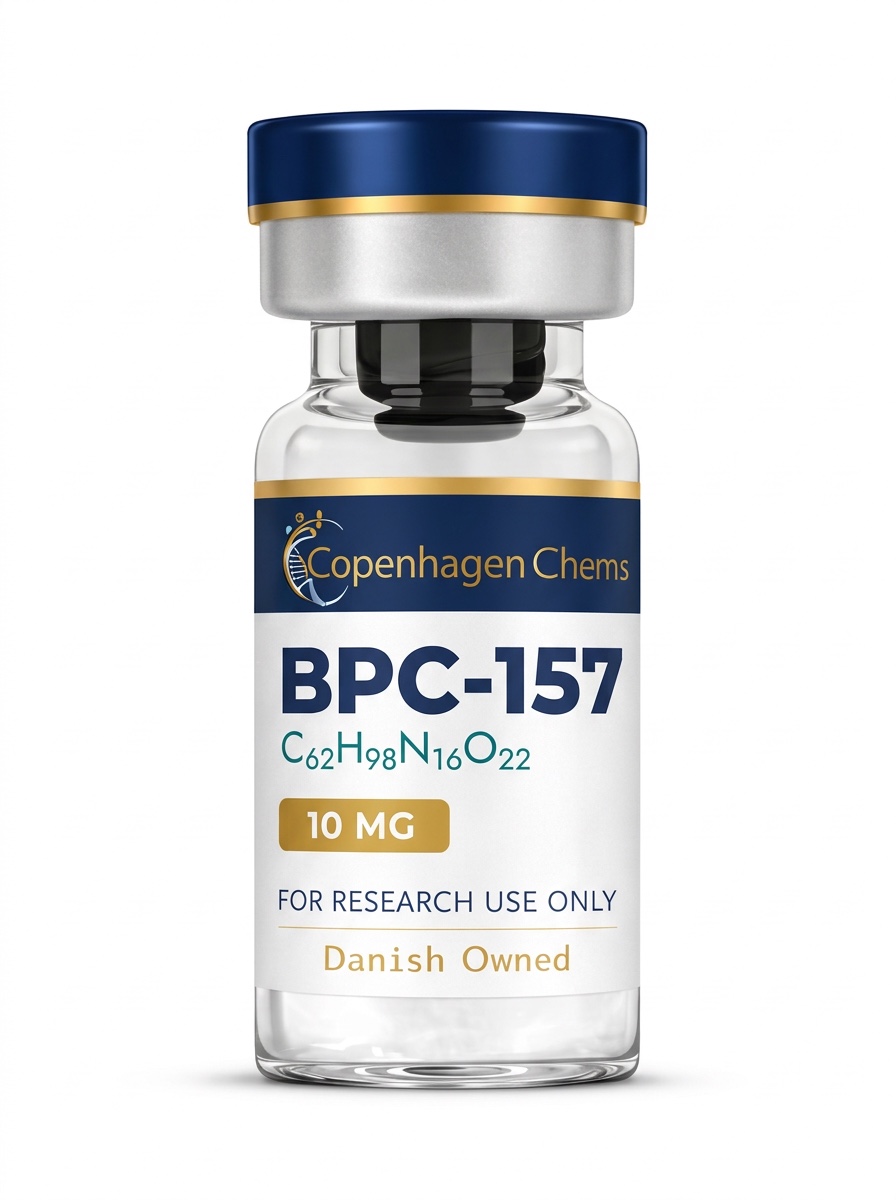
BPC-157
Body Protection Compound-157 (Bepecin)
- CAS Number
- 137525-51-0
- Molecular Weight
- 1419.53 g/mol
- Molecular Formula
- C₆₂H₉₈N₁₆O₂₂
Sequence
Gly-Glu-Pro-Pro-Pro-Gly-Lys-Pro-Ala-Asp-Asp-Ala-Gly-Leu-Val
Overview
BPC-157 (Body Protection Compound-157) is a synthetic pentadecapeptide consisting of 15 amino acids. It is a partial sequence of a protein known as Body Protection Compound that has been isolated from human gastric juice. Since its discovery, BPC-157 has been the subject of numerous preclinical studies investigating its effects on tissue repair mechanisms, gastrointestinal function, and cytoprotection in animal models. Published literature spans over two decades of research conducted primarily in rodent models, with investigations covering musculoskeletal, gastrointestinal, neurological, and vascular systems. The compound has demonstrated stability in human gastric juice, which is unusual for peptides of this size, and does not require a carrier for activity in published experimental protocols.
For research use only · Not FDA/EMA approved · Not for human consumption
Mechanism of Action
Published research suggests BPC-157 interacts with the nitric oxide (NO) system, modulating both constitutive and inducible NO-synthase pathways. Studies have described effects on angiogenesis through upregulation of VEGF (vascular endothelial growth factor) and its receptor VEGFR2, as well as modulation of the FAK-paxillin pathway involved in cell migration and tissue remodeling. Additional literature describes interactions with the dopaminergic system, GABAergic pathways, and serotonergic receptors. The peptide has been reported in animal studies to influence growth hormone receptor expression and to interact with the opioid system. Its cytoprotective effects have been attributed in published research to stabilization of cellular defense mechanisms and modulation of inflammatory mediators including prostaglandins, interleukins, and tumor necrosis factor pathways.
For research use only · Not FDA/EMA approved · Not for human consumption
Key Research Areas
- Gastrointestinal mucosal integrity and cytoprotection in rodent models
- Tendon, ligament, and muscle healing in experimentally induced injuries
- Bone fracture repair and periosteal reactions in animal models
- Neuroprotective effects in models of traumatic brain injury
- Corneal and retinal tissue repair in preclinical studies
- Vascular integrity and NO-system modulation
- Liver and pancreatic tissue protection in toxicity models
For research use only · Not FDA/EMA approved · Not for human consumption
Published Studies (8 cited)
| Author | Year | Key Finding | Source |
|---|---|---|---|
| Sever M et al. | 2013 | BPC 157 protected against ischemic challenge in rats, an effect linked to nitric oxide system modulation. | View paper ↗ |
| Chang CH et al. | 2011 | BPC-157 administration was associated with accelerated tendon healing and improved biomechanical properties in a rat Achilles tendon transection model. | View paper ↗ |
| Cesarec V et al. | 2013 | BPC 157 promoted healing of esophagocutaneous fistulas in rats, with reduced leakage and improved tissue closure. | View paper ↗ |
| Bilic M et al. | 2005 | Locally applied BPC 157 improved healing of CO2 laser wounds in mice, with faster closure than untreated controls. | View paper ↗ |
| Zemba Cilic A et al. | 2021 | BPC 157 counteracted L-NAME-induced catalepsy in rats, part of the work linking the peptide to nitric oxide and dopaminergic pathways in the brain. | View paper ↗ |
| Japjec M et al. | 2018 | BPC 157 promoted healing of the tendon-muscle junction in rats. | View paper ↗ |
| Krivic A et al. | 2006 | BPC 157 promoted tendon-to-bone healing after Achilles detachment in rats, with improved biomechanical strength. | View paper ↗ |
| Sikiric P et al. | 1999 | Overview of the pharmacological properties of the pentadecapeptide BPC 157 (PL-10), including its tissue-protective profile. | View paper ↗ |
For research use only · Not FDA/EMA approved · Not for human consumption
Dosage in Published Research
In published preclinical studies, BPC-157 has been administered to rodent models at doses typically ranging from 10 μg/kg to 10 μg per animal, via intraperitoneal (i.p.), intragastric, subcutaneous, or local application routes. Specific dosing protocols vary significantly across published studies depending on the injury model and target tissue being investigated. No standardized dosing protocol exists for research applications. All dosing information is derived from published literature and is presented for reference purposes only.
⚠️ Disclaimer: All dosage information is derived exclusively from published scientific literature and is presented for informational reference only. This does not constitute dosing guidance for any application.
For research use only · Not FDA/EMA approved · Not for human consumption
Storage & Handling
Store lyophilized powder at -20°C for long-term storage. Once reconstituted, store at 2–8°C and use within 14 days. Protect from light, moisture, and repeated freeze-thaw cycles. Handle under sterile laboratory conditions using appropriate PPE.
For research use only · Not FDA/EMA approved · Not for human consumption
Safety Profile (Literature Only)
Published preclinical studies have reported no observed toxic effects in rodent models at the doses investigated. No LD50 has been established in published literature. Studies have described BPC-157 as well-tolerated in animal models across multiple administration routes. No human clinical trial data is available to establish a safety profile in humans. This compound is for laboratory research use only.
For research use only · Not FDA/EMA approved · Not for human consumption
Related Compounds
GHK-Cu
A naturally occurring copper-binding tripeptide studied for its role in tissue remodeling, wound repair, and gene expression modulation.
RecoveryTB-500
A synthetic fragment of thymosin beta-4 researched for actin-binding properties and tissue repair mechanisms in preclinical models.
HormonesIpamorelin
A selective growth hormone secretagogue with high GH specificity, investigated for its clean release profile without cortisol or prolactin elevation.
Further reading on BPC-157
- BPC-157 vs TB-500 for Recovery-Model Research — side-by-side comparison
- What Are Research Peptides? A Complete Guide — 8 min
For research use only · Not FDA/EMA approved · Not for human consumption